Home » Articles posted by Anttu Lein (Page 7)

Author Archive

biologists convert cellulose to starch

biological systems

Experiments conducted out of the College of Agriculture and Life Sciences as well as the College of Engineering at Virginia Tech, led by associate professor of biological systems engineering Percival Zhang, have discovered a way to transform cellulose into starch. This new discovery indicates a potential to derive food sources from plants which are not traditionally considered to be food crops. This research could be used in the future to help solve food shortages throughout the world and provided a much more abundant ability for nations to grow food in soils that are not as nutrient rich as traditional food crops are grown on.

plant cell walls

The process uses cellulose which lines the cell walls of plants, and also happens to be the most abundant carbohydrate found on our planet, combined with cascading enzymes to create amylose starch for consumption purposes. This is possible because both cellulose and starch contain the same basic chemical formula however their chemical bonds are different. Utilizing enzymes it is possible to break the chemical link of cellulose and reorganize the components into amylose starch. Experiments conducted by scientists at Virginia Tech using corn stover (the remnants of the corn plant after harvest) is able to convert approximately 30 percent of the plant’s cellulose into these starches while leaving the remainder to hydrolyze into glucose for production of ethanol.
biomass

Amylose starch has been known to reduce the risk of diabetes and obesity and is an excellent source of fiber as it is considered to be a linear starch which is not degenerated in the digestion process. Since every type of plant contains cellulose, these discoveries by Percival Zhang could potentially make any plant a food source for the growing population of earth. Starch is estimated to make up between 20 to 40 percent of the daily calorie intake consumed by humans and is considered one of the most necessary components of our diet. Zhang’s research was published in the Proceedings of the National Academy of Sciences in November of 2012.

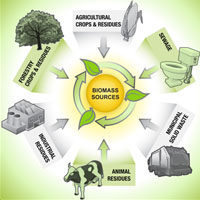
Biologists predict that this process would greatly assist in utilizing excess biomass to create useful products in an environmentally friendly manner. This bioprocess currently produces no waste products, doesn’t require a lot of energy, heat or reagents and can be scaled up for mass commercial production. In addition to these benefits, the ability to use any plant to create these products is imperative as this means that starches can be derived from plants that do not require nutrient rich top soil, heavy fertilizers, abundant water and pesticides. The name coined for this bioprocess is “simultaneous enzymatic biotransformation and microbial fermentation” and utilizes magnetic forces to extract the enzymes used in the process to recycle for reuse.

plant starch

Along with its potential for food production, this research can also be used for a number of other environmentally friendly products. One predicted use for this process could be to create biodegradable food packaging to help reduce the pollution created from shipping and storing foods. It is also expected to help in the storage and transportation for high-density hydrogen using containers made out of the materials created in this process.

This study was a joint collaboration between biologist Percival Zhang from Virginia Tech and scholar Hongge Chen to conceive the model for biotransformation while most of the research was conducted Chun You, a native of China attending Virginia Tech.

plant cellulose

bees honey

Bees and honey go hand in hand, but an interesting discovery from biologists published in the “Proceedings of the National Academy of Sciences” has led researchers to conclude that honey plays a more important role for bees than simply as a staple food source. Honey as it turns out is one of nature’s detox pharmaceuticals which stimulates genes for detoxification of chemicals and production of antimicrobial agents in the immune system of bees. The discovery of this came about after analyzing differences in the immune systems of wild bees and those used for commercial production of honey.

entomologists

Bees that are kept in captivity to produce honey for human food sources are not fed the honey that they produce in their hives. Instead these insects are fed sugar and protein rich supplements while their honey is collected and packaged for sale to humans. It has been traditionally thought that the sole purpose of honey production by honeybees was done as a form of food storage for the winter when flowers do not produce the nectar and pollen necessary to feed the colony. Entomologist May Berenbaum from the University of Illinois at Urbana-Champaign and her colleagues have found that this sweet food activates p-coumaric acid which is used in the immune system for detoxification.

Why should humans care about the health of bees?

Bees are perhaps one of the most essential insects to maintain plant health for a variety of agricultural and cosmetic purposes. In recent years bees have been afflicted by a number of strange occurrences some of which have baffled scientists such as the disappearance of workers from some colonies. With an increase in use of insecticides in crops and antimite treatments used in their hives by commercial honey harvesters, the ability for these insects to maintain their healthy lifestyles have been waning in the past decade. This has led to debates between entomologists in the scientific community to ponder what changes need to be made in the diets provided for commercial honeybees.

natural pharmaceuticals

It has been observed that honeybees who collect pollen from a variety of flowers build a healthier immune system than those fed artificial diets by humans. Remarkably, honeybees are said to have approximately one third the amount of detoxifying genes that most other insects possess despite being exposed to a number of different chemical compounds sourcing from the variety of pollen they acquire from different types of flowers. This leads many to believe that honey is more essential to the diet of bees than was once thought due to their natural deficiency in detoxifying genes.

chemical compounds

The immune system of honeybees has not been studied in detail until recently however more extensive research still needs to be conducted to arrive at an appropriate conclusion on the best method to improve health in bees. It has been discovered that the detoxifying genes in honeybees lack the ability to turn on at the presence of toxins in their system like most animals and insects, but that these are activated through the consumption of pollen. Luckily as their staple food source this helps to ensure that their detox capability is still functional. May Berenbaum stresses the importance of pinpointing an accurate assessment on the correct dose of p-coumaric acid for honeybees to avoid overdosing their systems and potentially damaging overall bee health from a misunderstanding of their natural diet’s balance.

scientific community

Health Benefits of Honey

Honey has long been known as a healthy food source which provides a number of benefits for humans including an energy boost, immune system boost and a source of carbohydrates. Used by athletes, this food contains natural sugars and fructose which provide a quick boost to energy and a sustainable long term boost as well as fructose is absorbed in the human body. In addition to these benefits honey has long been known as a supplement for antioxidants and antiseptic home remedies and is used to treat hangovers, sore throats and sleepiness.

biologists use clams solve environmental pollution

biologists

Environmental protection is just one aspect of focus among a myriad which biologists find compelling as it affects the sustainability of life on our planet. With our society becoming ever more dependent on technology one of the major concerns biologists face is the ever increasing pollution byproduct our technology produces. Some of the ecosystems most commonly affected by chemical byproducts are freshwater habitats such as lakes, rivers and streams. However there is a new local hero being used to help provide better analysis of environmental factors which could plague these ecosystems, and this can currently be found in clams!

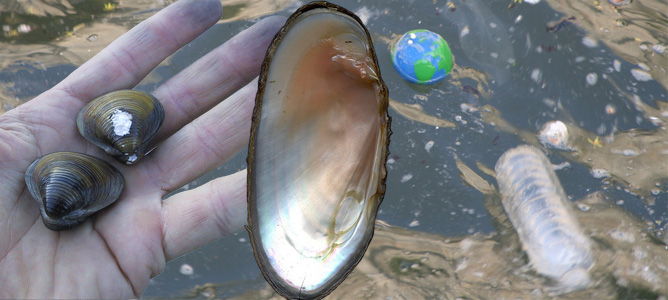
Yes clams, once thought of only as a delicious food source, these creatures have proven to be a useful tool for scientists to analyze the pollution content of fresh water ecosystems. Since clams are filter feeders their process of acquiring nutrients involves them sucking up water, filtering out nutrients and excreting the excess back into their water source. This process in turn leaves a chemical imprint in the clam’s tissue which is being used to determine what kinds of pollutants are present in certain waterways. Clever biologists have discovered that by strategically placing clams at the source of a waterway will help investigate both the cause and source of environmental pollution.

river habitat

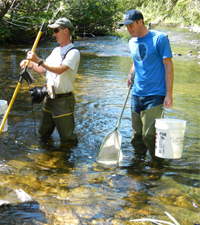
When clams are placed at the source of the waterway they will naturally be driven downstream. Collecting samples of these clams at various points in the waterway can then indicate which sections contain higher amounts of pollution which can lead to further investigations into where these pollutants may be originating from. The latest application of this technique is with biologists working with high school students to dig up clams from local water sources to investigate the health of the habitat. Clams are known as natural filters since their feeding habits in nature help to clean the water supply.

field biologist

Another technique has been implemented by biologists to mimic what geologists have long used to identify environmental factors. As it turns out, the shell of a clam can give scientists and indication of what types of chemicals could have influenced an ecosystem in the past. This process is referred to as a stable isotope technique which analyzes the makeup of the clams shell matrix. Nitrogen is one of the key components which is looked for to determine the influence of urbanization on an ecosystem. This research is heavily geared towards locating human made wastewater input into natural ecosystems to help biologists determine whether changes in an ecosystem are occurring due to natural environmental changes or through manmade influences.

These latest developments are expected to greatly assist coastal research by helping researchers identify first whether the habitat has undergone drastic human influence or whether there is some unknown environmental factor influencing the ecosystem. Although environmental damage is often seen in the most negative of lights, recent information has changed the view of some ecologists in the last few years. Discoveries of certain types of clams which thrive in oxygen depleted waters (commonly called coastal dead zones) has brought some hope back to the pursuit of ecological stability. It was once believed that these areas of the coastline were doomed through human intervention, however the ability for some species to adapt to these changes has amazed scientists.

conservation ecologist

The increase of these coastal dead zones has become ever more apparent around the United States and is attributed to pollution and climate change. Previously ecologists were most concerned with which species are dying off in these zones (which is still an important point of research) however not much was studied regarding which species can still thrive in these areas. As it turns out, the resilient clam has proven to be more remarkable than once believed in these areas. Despite this positive aspect, the fact of the matter is that these dead zones are still not a beneficial phenomenon, however this research has shown that there may still be a silver lining for ecologists in these deteriorating habitats.

river ecology

alzheimers disease triggered by protein molecules

cambridge department of chemistry

Alzheimer’s research conducted out of the Cambridge Department of Chemistry has potentially isolated a cause for what triggers the neurological disease in humans. The neurodegenerative condition is believed to be caused by abnormal proteins which develop “misfolded” causing the death of neurons in the brain leading to dementia and other neurological conditions. The discovery of these proteins has the potential to allow doctors to diagnose the condition at a much earlier state than currently is possible, which could lead to early treatment to slow or stop the disease from spreading. In addition to Alzheimer’s, it is believed that the same types of proteins are the cause of Parkinson’s.

chemist chris dobson

Professor Christopher Dobson from Cambridge University published an article about this discovery in the “Proceedings of the National Academy of Sciences” and has been investigating the causes of these deformed protein molecules for over 15 years along with his colleagues. Dementia and Alzheimer’s have both become more prevalent in recent generations as human life expectancy gradually increases, thus leading to a greater chance of “genetic malfunctions” in humans.

Alzheimer’s disease and dementia are considered to be one of the most costly (in terms of healthcare costs) in the UK trumping that of both heart disease and cancer combined. At the moment there are no treatment options available for patients to influence the disease, however the discovery of this molecular trigger is considered to be the first step to developing a drug to suppress the spread of the proteins associated with neuron cell death.

cell structure

How is Alzheimer’s disease triggered?

In cellular biology, protein molecules are synthesized from ribosomes (cellular assembly lines) which then get joined together to form amino acids that encodes DNA to send messages throughout the body. During this process protein molecules are typically generated in long strands then folded and compressed to generate the amino acids. It is during this process that deformities can occur in the protein molecules which creates abnormal structures called amyloid fibrils. These amyloid fibrils tend to clump together and become protein deposits which was once thought what caused the disease to set in patients with Alzheimers.

alzheimers disease

The recent discoveries have shown that these amyloid fibrils cause a chain reaction which compounds exponentially creating new areas of focus in a process called “nucleation”. These areas of focus begin creating new tendrils which contain less protein molecules which is what is believed to cause the “toxic oligomers” that kill neurons causing neurological disease such as Alzheimer’s disease and Parkinsons. With the death of neurons in the patient’s brain memory loss sets in causing symptoms of dementia.

Although the process of treatment is one which is still expected to be many years in the working, chemists and biologists are working together to map out the framework of how this process occurs in order to discover a biomolecular solution to treat disease caused by toxic oligomers. Using this research it could become possible in the near future to figure out a way to turn off this process of toxic agent generation preventing neurological disease like dementia from setting in.

conflict report syria

Many have heard the news or read headlines about the ongoing violence that has plagued Syria in the past two years, however the nature of the struggle is one which is often overlooked. With the rise of the “Arab Spring” many nations in the Middle East decided to pursue the option of democracy over seemingly totalitarian regimes, Syria was no exception to this fact. In many of these countries the uprisings of civilians, mostly through protests and peaceful demonstrations were sufficient enough to force regime change among the unpopularity of the current regimes. The fate for Syrians however has become much more complex and chaotic due to a number of factors stemming back all the way to the Cold War and the country’s relations with Russia.

The Syrian civil war began as an uprising of protests among the civilians in the country who wished to see an end to the dictator like presidency of Bashar Hafez al-Assad. Although labeled as the president of the country, Assad succeeded this role from his father who ruled the country for nearly 30 years prior to his death in June of 2000. The question that many often ponder is: how can a nation be labeled as a “dictatorship” when it has an elected President ruling the nation? The answer is more evident than one may initially suspect. In many nations across the world dictators assume the title of President in the hopes of showing their country abides by the peoples’ will thus helping to secure the legitimacy of the current regime. The reality in many of these instances are that elections often go unopposed either through government manipulation of poles, censorship of voting rights or by blatantly killing or threatening any opposition party to the point that no one is willing to challenge the current regime in an election.

The Rise of the Arab Spring

The Arab Spring began as a series of public protests against rulers in a number of nations throughout Northern Africa and the Middle East at the end of 2010. Although many of these began and ended as peaceful protests and demonstrations with the purpose of forcing out the rulers that impose dictatorship like regimes onto their people, some of these demonstrations eventually turned into skirmishes or all out wars with the goal of regime change. The Arab Spring is thought to have come about due to years of forced tyranny and the inability of civilians to enjoy the fruits of western technologies and luxuries that are suppressed by fearful rulers who seek to control media and news within their sovereignty.

This revolution of change in the Middle East was largely the stimulus for the current headlines broadcasting around the world about the conflict occurring in Syria. Although the United Nations did participate in the intervention of many of these revolutions, such as what occurred in Libya and to a lesser extent Egypt, many wonder why there has been no UN intervention in the case of Syria. Syria is seen by many as the forgotten country of the Arab Spring as turmoil still plagues its civilian population.

The Cold War Connection

Is the lack of intervention a sign that the world simply doesn’t care about the plight of the Syrian people? This is a far stretch from the truth of the complex situation which ties back to relations between the United States and the USSR from the Cold War era. The drawn out conflict between the Syrian opposition forces and the Syrian Army is rooted in old rivalries between super powers and capitalist goals to maintain business relations between the current Syrian regime and Russia over arms dealings. Syria is the largest buyer of arms and military merchandise from Russia who is largely responsible for impeding any intervention from the outside world in this conflict.

In 2012 amid the threat of economic sanctions from the UN Security Council, Russia promised its ally to veto any sanctions debated against the Syrian government and continues to supply arms to Assad’s regime. Aside from their arms agreement which is estimated at about a $4 billion annual contract, Russia is also involved in infrastructure, tourism and energy assets in Syria including a $12 million contract to explore additional oil fields near the Iraq border. With the close involvement of Russia in their economic and political policies, it is likely that any military intervention in the conflict will not be possible in the near future leaving Syria to resolve its own civil conflict internally.