Home » Articles posted by Anttu Lein (Page 6)

Author Archive

black sea holds genetic data record

pyrosequencing 1

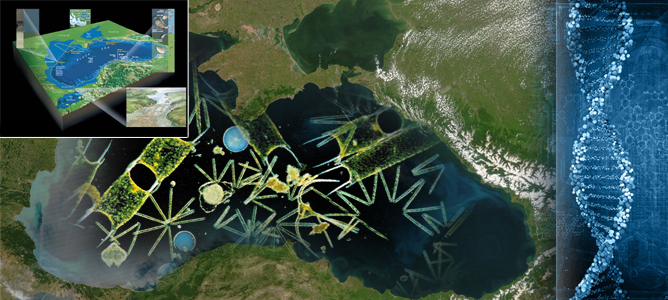
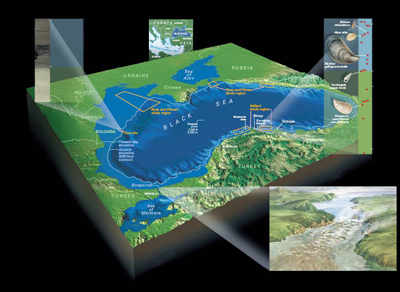
Analyzing genetic data is one of the latest trends with scientists to try to unlock the secrets of how life has evolved and came to be on Earth. Recently a marine paleoecologist by the name Marco Coolen discovered a treasure trove of ancient genetic data in the Black Sea from a number of extinct species of plankton. Marco Coolen has been conducting research with Woods Hole Oceanographic Institution to mine up the sedimentary layers of the Black Sea which led to the discovery of this vast amount of genetic material.

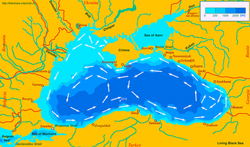
Due to its natural isolation, the Black Sea has been an area of interest for climate change research as it preserves evidence of climate change almost like a textbook. Geologists and oceanographers have long been interested in this region as an archive to the hydrologic and continental climate change of our past. Although in modern times the Black Sea gets a steady stream of marine water through the Strait of Bosphorus and freshwater from streams, this area used to be an isolated lake prior to glacial melting and sea level rises after the ice age.

What happened to the plankton in the Black Sea?

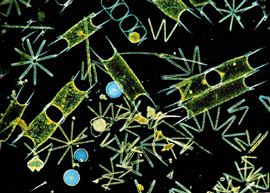
Researchers are currently looking to answer this question but little evidence has been found at this time. The time span that they are focusing on is during the Late Glacial to Holocene to discover what ecological changes could have led to the decline in plankton life approximately 10,000 years ago. Genetic research has begun to take a forefront in this investigation to reconstruct the time line of climate change on plankton life.

pyrosequencing 2

DNA evidence is considered to be the best solution to solving this riddle to examine the ancient ecology in more detail. Typically the most common tactic used to investigate the fossil records is with a microscope to determine what species existed in core samples taken from the soil and Earth in the desired area. With a lack of fossil records scientists are forced to examine the genetic residue of the soil samples to provide enlightenment on the species that populated this ecosystem in the past.

Another problem that scientists ran into was the lack of a genetic library for some of the older species of plankton found. Currently a clone library is used to compare genetic data found in the soil as a cross reference tool to determine what species the biological material came from. With a lack species present in the current clone library however researchers have to rely on more advanced techniques (pyrosequencing) to acquire the information they are seeking.

What is Pyrosequencing?

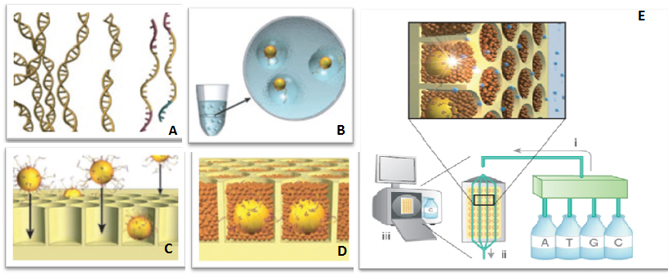
Pyrosequencing is a process developed in 1996 by Mostafa Ronaghi and Pal Nyren from the Royal Institute of Technology located in Sweden. This process uses nucleotides to produce DNA sequencing based on synthesis. This process uses a single strand of DNA as a template and then utilizes a system of generating its complimentary strand using DNA polymerase and chemiluminescent enzymes. The base pairs of nucleotides (A, C, G, and T) are added and removed in a sequence until light is produced from the reaction indicating the complimentary solution to the DNA template. This helps to determine the ordering and structure of the DNA strand. Pyrosequencing is used primarily to figure out the genome assembly of close relative to an organism whose genetic profile is already available. Genetics are becoming an ever more popular method of scientific evidence and are being used to trace the history of ecological changes in the Black Sea.

pyrosequencing 3

pyrosequencing 4

What other factors are considered during investigations into the Black Sea’s plankton change?

The salinity of the Black Sea and temperature are key areas of focus for researchers in the region. Emiliana huxleyi is a photosynthetic organism which contains alkenones (organic compounds) where the ratio of hydrogen can be used to determine the water’s surface temperature. Using this process it has become possible to retrace the salinity changes over the past 6,500 years in the Black Sea thus far.

Conclusions are beginning to surface as to what types of influences could have caused the changes in the environment. It is believed that four major changes have occurred since glacial melting began influencing the ecology of the Black Sea. An increase in salinity is attributed to waters from the Mediterranean Sea depositing marine waters in what was previously a freshwater lake. This increase in salinity caused some forms of algae and plankton to die off which is estimated to have occurred about 9,600 years ago. This was followed by a period of dry climate changes approximately 5,200 years ago which then transitioned into a cooler and wetter period about 2,500 years ago. Finally human influence over the past century appears to have contributed to the most dramatic and damaging changes to the ecology of the Black Sea.

black sea map

This research, although conducted in an isolated region has given new light to just how sensitive marine ecology responds to climate change and human influence. Ultimately this research has helped to discover a plethora of ancient plankton and algae species which were previously not found in fossil evidence helping scientist reconstruct the past in greater detail.

bacterial communication exists in chemical signals

bacterial communication

Communication is an evolutionary trait that was once thought to be an audio phenomenon used by animals to send signals to each other. Throughout recent decades however the concept of communication has changed drastically to include a number of ways to relay a message to another organism in a species from a variety of methods. The discovery of how bees use communication through dances was one of the first revelations to open the scientific community to other forms of communication outside of vocal expression. As investigation continues into the art and types of communication it is becoming clear that almost all organisms have a means to transmit messages to others in their species through movement, vibrations, chemical signals, sound and electromagnetism. Recent experiments conducted by Dr. Ralf Heermann, a microbiologist from Goethe-University in Frankfurt, has discovered a method of communication between bacteria through chemical signals.

How do bacteria communicate?

acyl homoserine lactone

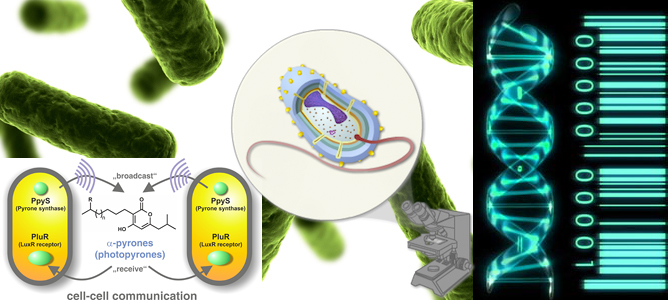
Although bacteria are incapable to produce audio communications due to a lack of sophisticated biological structure it has been determined that they still possess a “language” which was previously unknown to scientists. The process in which bacteria and other simple organisms communicate is referred to as quorum sensing. It was previously known that bacteria are able to send chemical signals to others in their immediate vicinity using N-acyl homoserine lactones (AHLs) to transmit information. These chemicals are synthesized from enzymes and excreted for other bacteria to receive which appears to alter gene expression in the receptor cells. A mystery remained however in that most bacteria contain the LuxR-type receptor but only a few contain the Lyxl homolog which produces these enzymes. How is it possible then for a community of bacteria to communicate with each other without the ability to create a chemical signal for others?

quorum sensing

This mystery may finally have an answer due to the research conducted by Professor Helge Bode and Dr. Ralf Heermann. The key to this chemical process starts at pyrone synthase (PpyS) which produces alpha-pyrones, specifically photopyrones, to transmit signals which are then received by the LuxR solo receptor (PluR) of another bacteria organism. Photopyrones are catalyzed in a process of biosynthesis which begins from the pyrone synthase (PpyS) which tell nearby bacteria to recognize each other and clump together in a community. It is believed that this process is a defensive mechanism which allows a community of bacterial cells to be less likely to succumb to the immune system of an insect in addition to producing toxins which can kill their victim. The clumping of bacteria produces a biofilm which is typically created out of a an extracellular polymeric substance (EPS) matrix synthesized from extracellular polysachharides, proteins and DNA.

biofilm synthesis

Methods of Communication

The phrase “communication is key” is one which many individuals have been reinforced to believe throughout high school, college and at the workplace. This ideology appears to hold true for not only humans, but most forms of life on Earth. It was once thought that single celled organisms did not have the capability to communicate with each other and only organisms with higher intelligence had this capability. Throughout recent decades however it is becoming more and more apparent that plants, bacteria and even single celled organisms do possess the ability to transmit signals to others in their community to help them achieve a variety of goals. Communication methods discovered to date include audio, chemical, electromagnetic, vibration, visual and many others. As the scientific community continues to explore the natural world it is possible that some currently unimaginable methods of communication exist outside of the current realm of human speculation.

bacterial biofilm

cambodian genocide

khmer culture

A Brief History of Cambodia:

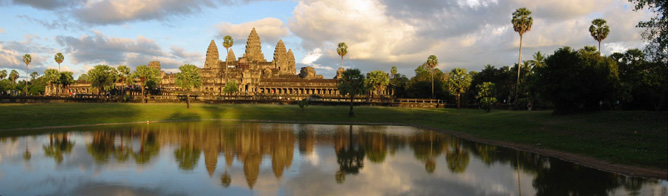
Cambodia is a beautiful country located in Southeast Asia with a rich cultural heritage dating back before 500 B.C., long before the rise of the Khmer Empire. During this time the geographic region was under the control of the ancient Chinese Kingdom of Funan which later evolved into the city-state of Chenla until 802 A.D. when the Kingdom of Cambodia was formed. Hinduism was the primary religion as traders frequented Java which had strong ties with the Bengal region of India and modern day Sri Lanka. The peak of the Khmer Empire flourished between 802 A.D. and 1431 A.D. at which time they were the most powerful kingdom in Southeast Asia leaving their legacy behind in the form of the historical site of Angkor Wat, the largest Hindu temple complex in the world (constructed between 1113-1150). Today the people of Cambodia speak Khmer and Sanskrit and the primary religions of the nation are Hinduism, Mahayana Buddhism and Theravada Buddhism.
angkor wat temple

Rise of the Khmer Rouge:

khmer rouge

Many westerners were not even aware of the country of Cambodia and had little clue about the rich history of this country and their former empire. This would all change in 1975 at the start of the Cambodian Genocide. The Khmer Rouge began as a political party referred to as the Communist Party of Kampuchea in 1968, influenced by the Vietnam People’s Army from Northern Vietnam. The leading figure of this party was Pol Pot along with his associates Nuon Chea, Ieng Sary, Son Sen and Khieu Samphan. Amid the growing popularity of communism throughout Asia at the time the Khmer Rouge in alliance with the Democratic Republic of Vietnam (North Vietnam) and the Viet Cong staged a revolution which turned into the Cambodian Civil War. Support from the United States and the Republic of Vietnam (South Vietnam) was provided to oppose this revolution in the form of military intervention, unfortunately most of the assets were relocated and tied up in the Vietnam War so the assistance provided was insufficient to quell the rebellion. This coup lasted between 1970 and 1975 before bringing an end to the former government of Cambodia.

In April of 1975 the Khmer Rouge seized power in Cambodia placing Pol Pot as the leader where he was nicknamed “Vach du Mach” (One with the Gun). The country would remain essentially without a government until the Constitution of Democratic Kampuchea was established by the Khmer Rouge on January 5th, 1976. Unlike the communist revolution in China, Pol Pot and the new constitution did not provide provisions to allow the bourgeois (aristocratic society) to play any role in the social reconstruction of the nation and instead sought to oppress and exterminate people outside of the working class and members of the former government.

Forced Deportations:

the cambodian genocide

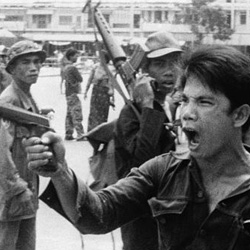
Deportations of all major cities began in Phnom Penh, which previously held a population of 2.5 million people, forcing the displaced to live in the countryside and adopt the lively hood of the laborers in the fields. Even patients in the hospitals of Phnom Penh were forced to leave, many of which died due to the horrendous conditions of their deportation. The displaced peoples were referred to as “new people” in the countryside and were forced to live in the lowest unit of social classes called the krom (group). The “old people” who made up the previous working class were isolated from the “new people” who had little privacy in almost every aspect of their lives. Reports state that the “old people” although portrayed as having favor shared similar conditions as the newly displaced. Before long Phnom Penh was practically a ghost town, those who chose not to leave in a timely manner were slaughtered in the street with impunity.

The peasants who inhabited the countryside showed their support for the Khmer Rouge as they held disdain for the aristocratic society who inhabited the cities. This led the displaced people, forced out of their homes, to fear everyone they encountered not knowing who they could fully trust. Children were used as recruits to spy on the adults and soon became ingrained in the military and political views of the Khmer Rouge regime. The “new people” were forced into re-education programs where they were brainwashed with propaganda to align themselves with the beliefs of the regime.

Cambodian Genocide: Year Zero

During the rule of Pol Pot people with any background of sophistication and intellectualism were stigmatized severely fated to execution, imprisonment or re-education to leave their old ways behind. Physicians were forced out of practice or outright executed leaving health conditions abysmal throughout the country. Scholars, poets, musicians and other members of cultural society shared the same fate. Executions and prison camps became commonplace for the people of Cambodia which were enforced by the group the Santebal literally meaning “keeper of the peace” who acted similarly to the SS of the Third Reich in Germany during World War II.

The term “Year Zero” was coined to describe 1975 where money became useless, religion banned and cultural society became nonexistent. The next three years would essentially become the dark ages for Cambodia where terror and violence would reign supreme.

the cambodian genocide 2

Life in the Prison Camps:

The most infamous prison camp was Tuol Sleng (S-21), formerly a high school, responsible for the imprisonment, torture and murder of thousands of civilians. The level of detailed used to document the prisoners, torture techniques and execution was astounding in Tuol Sleng where it is estimated that approximately 20,000 prisoners were killed. Despite the notoriety of this prison, at least 150 other known sites like this existed throughout Cambodia during this 3 year period of violence.

Prisoners arriving at the camp were initially photographed and forced to provide autobiographies in great detail to the prison authorities. Prisoners were either shackled to the walls and floor in smaller cells or to other prisoners in larger cells. Prisoners were awoken at 4:30 AM, stripped and searched for instruments that could be used to commit suicide before being fed meager portions of rice porridge and soup containing only leaves (only 4 spoonfuls were provided to each inmate). Needless to say the desire for prisoners to commit suicide was high leading guards to implement a policy to combat suicide rates. Inmates did not receive showers or baths and instead were hosed down once every four days. Beatings and torture were inflicted upon anyone who disobeyed the authorities including drinking water without permission of the guards.

Torture techniques used in the prison included beatings, electric shocks, searing metal instruments, cutting with knives, pulling out fingernails, pouring alcohol on wounds, waterboarding, and for female inmates rape often was used despite the Democratic Kampuchea’s official policy against sexual abuse. Execution methods included hangings, suffocation with plastic bags, starvation, and leaving inmates to bleed out although outright killing was frowned upon in “re-education camps” since the purpose of these were to force the prisoners to confess to crimes the regime stated they committed. Perhaps the worst fate of all was for those who visited the “Medical Unit” of Tuol Sleng which conducted “medical experiments” on prisoners including removing organs without anesthetics or sedation. Interrogators documented every instance of torture and aspect of the prisoner’s lives in surprising detail which was later discovered by the CIA in records held by the Khmer Rouge. Tuol Sleng is actually where the CIA got the idea to employ waterboarding in their enhanced interrogation techniques. Today Tuol Sleng has been converted into the Genocide Museum honoring the memory of those who died and suffered during the senseless reign of the Khmer Rouge.

The Killing Fields:

the killing fields

The most notorious extermination site is Choeung Ek which is marked today by a Buddhist stupa housing 5,000 human skulls exhumed from the mass grave, organized by sex and age. Almost everyone associated with the former regime were arrested and executed by the Khmer Rouge as an attempt to purge their country of its past. The Cham (Cambodian Muslims) had the worst fate of all who received no sympathy from members of the Khmer Rouge. Vietnamese, Thai, Chinese, Cham, Christians and Buddhist monks were targeted for persecution and execution by the regime. Despite this discrimination the majority of those killed off during the genocide were ethnic Cambodians. Those destined to be executed were often forced to dig their own graves, most being shallow due to malnutrition and starvation, before being executed by young men and women from peasant families.

Estimations of the total amount killed during this 4 year period range from 1.7 million to 3.42 million with an exact number difficult to pinpoint due to the large number of mass graves sites throughout the countryside. The Khmer Rouge officially acknowledges their responsibility for killing 2 million people which is generally referenced as the death toll for this conflict. Many of the bodies of victims may still remain undiscovered to this day.

The Khmer Rouge Overthrown:

In 1978 a communist rebellion took place in eastern Cambodia leading Pol Pot to announce via radio broadcast his intention to exterminate 50 million Vietnamese along with Cambodians he labeled as having “Khmer bodies with Vietnamese minds”. 100,000 communist supporters were killed throughout the next 6 months which spurred the Socialist Republic of Vietnam to invade the country and oust the Khmer Rouge. Despite being overthrown in 1979, the Khmer Rouge political party existed all the way up until the 1990s. Pol Pot fled the invasion into Thailand along with many of his former party members where he lived in relative peace until his death in 1998 in his bed due to suspected heart failure. His death occurred on the night of April 16, 1998 just hours after he listened to the radio broadcast “Voice of America” which slated him to be turned over by the Khmer Rouge to an international tribunal to face war crimes.

the cambodian genocide 1

The Final Toll:

The Cambodian Genocide today is often labeled as the most senseless genocide known in history. There was no clear plan set in place for the country or government once toppled by the Khmer Rouge with the main focus seemingly on killing off the intellectual members of the country as the primary motivation of an angry peasant rebellion. 21% of the country’s population was slaughtered in a period of just 3 years. Making this atrocity worse, members of the former regime sought political asylum in Thailand and went completely unprosecuted up until 2009, the most famous occurring in September 16th, 2010 when the second in command Nuon Chea was indicted for war crimes and crimes against humanity by a UN tribunal. Many to this day still remain ignorant to the atrocities that occurred during the Cambodian Genocide along with other similarly horrifying events throughout history.

Why Long Beach?

cambodian dancer

Most of the Cambodian Refugees that fled during this period of conflict sought asylum in Thailand and the United States. Today Thailand is the host of the largest Cambodian community outside of Cambodia and Long Beach, California holds the largest community of Cambodians outside of Southeast Asia. The question has been left for many to ponder, why Long Beach? Naturally one would take a look at the immigration patterns of other countries and would assume San Francisco or New York City as these are the largest ports on the Eastern and Western seaboards. There are two driving factors which lead the population of Khmer refugees to settle in Long Beach, those being Cal State Long Beach and Camp Pendleton.

In 1953 Cambodia gained its independence from France becoming a sovereign nation again after nearly a century of colonization (1863 – 1953). Almost a decade later in 1961 California State University Long Beach admitted the first 4 Khmer students as a part of their Industrial Arts program. Incentives were offered by the University to Khmer students in an attempt to gain U.S. favor in the development of the budding country, with what they expected to be a hopeful future for a fledging nation. This began the cultural root of Khmer heritage in Long Beach although only about 10 families remained in the city after graduation.

During the Khmer Rouge reign refugees who reached Thailand safely were offered asylum in United States. They left Southeast Asia with the two primary destinations of arrival being Fort Chafee, Arkansas and Camp Pendleton, California. Arriving in the U.S. with nothing but the clothes on their backs, the families that remained in Long Beach quickly organized the KSA (Khmer Solidarity of America) which was later renamed the CAA (Cambodian Association of America) which helped the arriving refugees settle around the Long Beach area.

The “second wave” of Khmer refugees came after the invasion of Cambodia by Vietnam to overthrow the Khmer Rouge. At this time Cambodians were officially offered political refugee status for the first time and the organization setup by the federal government, the Office of Refugee Resettlement, attempted to disperse the population of arriving refugees in what was called “the Cluster Project”. The Cluster Project attempted to prevent large populations of refugees from settling in the same city which could become taxing on an individual state’s resources and also inhibit assimilation in American life as well as leaving little incentive to learn English.

Despite these efforts by the federal government the Cluster Project was largely a failure and most of the refugees decided to settle into Long Beach to reunite with their families. Part of this was due to the fact that almost all of the refugees arriving in the “second wave” had been exposed to severe psychological, emotional and physical trauma as a result of the war. In almost all cases, these refugees not only lost at least 1 family member during the violence but personally saw the deaths of their loved ones in the atrocities that occurred during the war and genocide. In 2001 with approval from the City of Long Beach Cambodia Town was officially designated which is now referred to as the Cambodian capital of the United States.

khmer girl

physics matters higgs boson particle

What is the Higgs boson particle?

higgs boson discovery 1

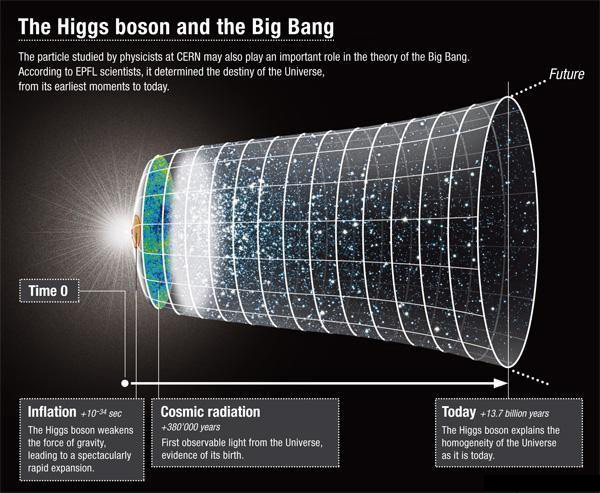
Particle physicists Peter Higgs first theorized about the Higgs boson particle back in 1964 and believed that this could be an elementary particle essential for continuation of research in particle physics. The problem eluded them on how they could prove this elementary particle actually existed. The belief was that there existed throughout the universe a Higgs Field which is essentially an energy field that provides other particles with the properties that we associate with their mass. Mass however cannot be created by the Higgs field as it is contradictory to the physics law of conservation stating that matter and energy cannot be created, instead it is the belief that the Higgs field generates the properties that define how we understand mass today. This is referred to as the Higgs effect which explains the process of how a particle receives mass through the influence of the Higgs boson particles that exist in the Higgs field.

This theory, referred to as the Standard Model, had long been pondered by theoretical physicists until the development of the CERN particle accelerator in mid 2012 in Geneva, Switzerland. Using the Large Hadron Collider scientists were able to positively verify the existence of the once elusive Higgs boson particle which made front page news worldwide. The discovery of the Higgs boson particle helps to explain how the Big Bang occurred 13.7 billion years ago essentially creating our universe out of nothing. Due to its association to the creation of the universe the particle was mislabeled by press as the “God particle” which has frustrated both the scientific community and religious community alike who do not prefer to use this label for Higgs boson.

In order to verify the existence of the Higgs boson it took scientists several months of combing through data created by the Large Hadron Collider where particles were smashed into each other at high rates of speed. It is estimated that only one in a trillion collisions were able to produce on Higgs boson leaving scientists around the world to wonder why this particle is so elusive. In order to fully understand the relevance of Higgs boson it is first essential to grasp the essentials of the Standard Model theory of physics.

higgs boson discovery 2

What is the Standard Model of physics?

The Standard Model of physics is a theory which describes elementary particles (fermions or bosons) as well as explaining three of the basic forces of nature. It is a combination of quantum mechanics, special relativity and group theory mathematics which contain Lagrangians and Hamiltonians (equations with the smallest and largest points).

What are fermions?

The theory describes fermions as being the particles we would typically learn about in chemistry or physics such as protons, neutrons and electrons. These particles contain properties such as mass, charge, spin, color charge and hypercharge. It is believed that there exist 12 different types of fermions which include six quarks and six leptons. Protons and neutrons would be considered quarks while electrons would be included in the definition of leptons. It is possible for leptons to exist by themselves however quarks cannot exist in isolation as they are held together by color force.

What are bosons?

Boson particles are believed to be the second type of elementary particles described in the Standard Model of physics. These are believed to all contain an integer spin which allows them the capability to exist in the same time at the same place simultaneously as other boson particles. These particles are divided into two subgroups of gauge bosons and Higgs boson which essential allow the most fundamental forces of nature (strong interaction, electromagnetic force, weak force and gravitational force) to exist. Force is created through the interaction of movement of gauge bosons between fermions with the possible exception of gravity which still eludes physicists to this day.

fermions and bosons

higgs boson discovery 3

What is the next step for Higgs boson?

The discovery of this particle generated more questions than answers as is typical in scientific research. Despite the elation of this discovery many scientists point out the fact that they actually prefer their theories to be disproven as although it is comforting to feel right nothing is learned from confirming a theory. There are still many more questions to answer with the two prevalent being what is the dark matter that makes up most of the known universe and why is gravity such a weak force in comparison to the other 3 fundamental forces of nature? Investigations into how Higgs boson behaves and interacts with other particles is currently underway to help enlighten the scientific community with what this discovery may mean for other theories relating to the Standard Model.

higgs boson discovery 4

silicon-nanoparticles improve lithium-ion battery

silicon technology

Silicon has been a substance of great importance for humanity since the days our ancient ancestors first discovered that this can be fashioned into cutting tools due to its properties that make it strong yet able to be fractured fairly easily. Silicon is a metalloid chemical element (considered a crystalline) which has conductive properties making it valuable for technological research. Recently scientists out of Stanford University have discovered that its conductive properties can improve the efficiency of lithium-ion batteries which are currently used for a variety of functions including those used in hybrid cars and some models of airplanes.

What are the benefits of Lithium-Ion Batteries?

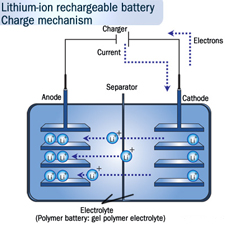
Lithium-Ion batteries are commonly known to most people as “rechargeable batteries” which is one of the main reasons these are increasing in popularity to save the cost of having to recycle the components of a batteries shell. Previously nickel-cadmium was used to create batteries however chemists discovered in the 1990’s that lithium ion is a superior substance to use for this function because it can store almost twice the charge of its predecessor. With our ever increasing concentration on improving energy supplies it appears as if silicon technology could be implemented in the next generation of energy storage systems such as batteries.

lithium-ion battery

Silicon Technology:

Chemical engineer Zhenan Bao of Stanford University understands the growing need of energy resources and how more efficient storage devices are required to enhance our ever increasing use of portable technology. Bao and his colleagues came to the realization that silicon is the best natural resource to help improve both the cost and efficiency of battery life while also being environmentally friendly. Being a naturally occurring element with almost no negative environmental side effects, silicon is perfect for implementation in batteries which were once known for being potentially harmful in terms of environmental waste byproducts.

The latest studies into the combination of silicon and lithium have shown that the two elements together can provide approximately 400% expansion when used towards energy storage for a battery. Unfortunately there is a side effect to this expansion in that fractures can occur in the electrical contact when batteries are recharged or discharged. Currently this is being resolved by Stanford researches by applying a hydrogel on silicon nanoparticles in a technique referred to as in situ synthesis polymerization.

hydrogel

Nanoscale Architecture:

Bao attributes the new generation of batteries his colleagues are researching not only to the materials used in them, but also to the design they have created for the placement of materials and nanoparticles creating an electrochemical improvement over older versions. This has become possible using electron microscopes to analyze how the spaces between silicon nanoparticles can be properly optimized to fit into the spaces between the hydrogel used thus allowing a more efficient expansion capability when lithium is used.

One of the issues encountered in this study however was the fact that hydrogel and lithium have a potential of sparking fires due to the main component in hydrogel being water. The only way to counter this currently is by removing the water particles after the hydrogel has been set in place to minimize the chances of having lithium ignite when it comes in contact with water. Along with this there are a few other technical issues which have been discovered in the creation of this new battery, however Yi Cui an associate professor at Stanford holds onto his optimism that this new battery can be manufactured for commercial use soon once all the kinks are worked out of the technical design of it.

silicon nanoparticles