Home » Articles posted by Anttu Lein (Page 5)

Author Archive

bomb detecting laser technology

bomb detecting laser

Research conducted out of Michigan State University by Marcos Dantus, a chemistry professor and founder of BioPhotonic Solutions, may lead to the potential of detecting trace chemical materials using lasers to increase security at checkpoints such as those in airports worldwide. Marcos Dantus’ findings are published in the latest issue of “Applied Physics Letters” detailing how lasers can be used to scan an individual to find trace chemical residue used to make explosive materials on clothing and luggage. The potential for this technology may lead to enhanced security techniques will speed up the time it takes for individuals to cross security checkpoints in addition to avoiding unnecessary personal intrusions from human searches.

airport security

While still in an early developmental phase, the laser as it is currently designed uses a single beam to detect explosive material and the location at which these materials are found. In preliminary studies minute residue was detected on the zipper of an individual who handled explosive materials prior to testing this new technology. The concept of this technological breakthrough has been theorized for decades however the underlying problem to overcome has always been finding a way to utilize a laser beam for detection that is weak enough to be used safely on humans.

Current detection procedures for explosive materials require an individual’s hands to be swabbed and have the swab placed in a device called an ion mobility spectrometer to analyze the chemical makeup of the swab. In Japan a prototype boarding gate has already been installed using a similar procedure where the boarding cards are scanned for explosive materials that could contain residue from explosive materials on a passenger’s hands. Airport security personnel worldwide are seeking more efficient ways to provide safety without additional inconveniences associated with enhanced security procedures for passengers.

How does this laser detector operate?

bomb detecting laser 1

The bomb detecting laser operates by projecting a beam with alternating pulses. The first pulse creates resonation with a specific chemical frequency that exists in explosives while the second pulse acts as a point of reference. The resonation in the first pulse when it comes in contact with explosive chemicals causes a delay which is compared to the “shadow” reference in the second pulse. This indicates the presence of potentially hazardous materials in the object scanned. Currently this device is able to detect materials within ten meters of the laser’s projection point. The idea came to Dantus while he was employed in the field of biomedical imaging with Harvard using a similar type of technology used to detect cancer in patients.

Despite the use of lasers one might think that the color of the objects scanned might influence the outcome of the scan. In actuality this technology can be used on almost any objects regardless of their shape, surface texture or color to provide precise results. Current expectations for deployment of this technology are projected to see a useful prototype created within the next year however it may take much longer before this is seen in airports or security checkpoints. One unnamed aerospace company has already taken an interest in the technological applications of this idea and are funding further research to develop a prototype.

proteus microchip biotechnology

biotechnology proteus microchip

Health care is a massive industry but is often criticized due to its inefficient standards and regulations at times. A study from the World Health Organization shows that over half the pharmaceuticals prescribed to patients are done so unjustifiably. Health care organizations are not all at fault however, the W.H.O. also stated that studies indicate that over half the medications prescribed to patients are not taken regularly as they should be. With failings on both the side of the consumer and the provider a solution has been proposed by the digital health care technology company Proteus in their latest biotechnology based product.

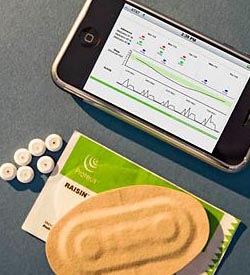
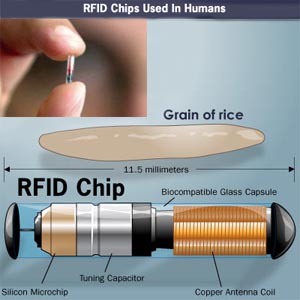
Proteus has proposed a microchip sensor that can be placed within a capsule and ingested by a patient which can send electronic signals to a doctor thus allowing a doctor to easily monitor the status of his patient. Although many might find this highly intrusive it could prove beneficial for patients with chronic illnesses and life threatening illnesses that require constant maintenance. The chip uses copper and magnesium which are both essential minerals for the human body attached to a grain of sand which can create a similar result as can be seen in a potato battery. When the sensor comes in contact with stomach acids it produces a charge which is relayed as an electronic signal to a patch worn on the patient.

biotechnology proteus microchip

The patch can indicate a variety of factors such as vital signs, sleep and movement in the patient. Data is relayed from the external patch to a cloud server where doctors can check in on a variety of devices to ensure that patients are taking their medication accordingly. Each time a signal is sent this indicates to the caregiver or doctor that the pill has been ingested. The microchip embedded within the pill provides accurate data on the type of drug ingested and its dose along with a time stamp. This may prove beneficial for certain illnesses that require drugs to be taken on a precise regiment to ensure their proper functionality. Additional indicators on side effects are relayed as well which include whether the dosage is correct and whether the drug achieved its intended function.

The prototype of the Proteus sensor has launched its pilot tests throughout the UK to provide a greater insight into the benefits and drawbacks of this technology. Oracle, a hardware and software company most notable for their acquisition of Java, has already invested in Proteus to support their technology. Oracle believes that its relationship with Proteus can provide a greater ability for life science technologies to enhance human health. Currently Oracle manages the cloud servers and software that receive the data from the patient to be relayed to the caregivers.

biotechnology proteus microchip

The cooperation between Proteus and Oracle could prove to provide enhanced solutions in the industry of biotechnology and health care with the goal of creating early warning detection and management of serious conditions. This creates a level of accountability and responsibility in providers which was previous left up to the patient to manage independently. Because of the rising cost in health care insurances having the ability to monitor doses of required medication could eventually save health care providers additional costs for prescribed medication that is not taken by the patient. Recent studies have shown that approximately 7% of electronic prescriptions contain errors while 37% of prescriptions which are hand written by a doctor contain errors. Dispensing errors make up about 2-3% of prescription errors as well. The total cost for these failures of the distribution of pharmaceuticals results in an estimated bill of approximately $200 billion annually which equates to an average of 8% of total health care expenses.

biotechnology proteus microchip 3

The technology created by Oracle called MedSnap ID app allows pharmacists to take photos of pills prescribed so that the sensor can properly identify them. Approximately 3,500 different types pharmaceutical drugs (including different manufacturers) are currently uploaded into the system. The sensor can also tell an almost precise dose to a tenth of a millimeter and use color, shape and shape to identify the drug in a digital repository. Indications can also be flagged to a doctor if there is a harmful dose or if there are any interactions with other drugs ingested by the patient. If this technology proves to be as reliable as it indicated in initial testing tremendous benefits can be gained by consumers and providers in the health care industry alike.

moser lamp refraction of light

alfredo moser

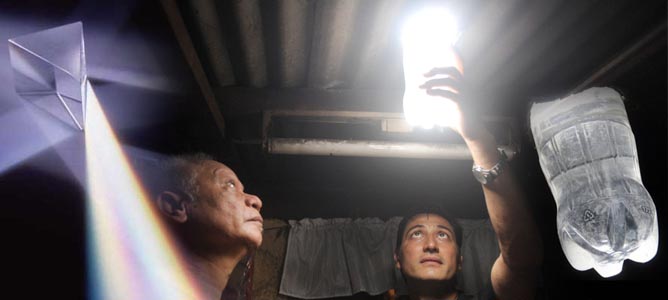
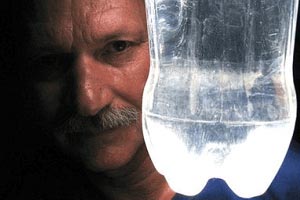
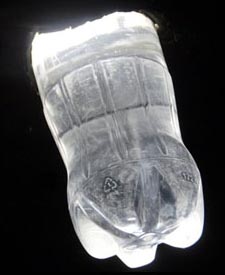
Bottled light is the latest trend in energy conservation which was founded by Alfredo Moser, a native of Brazil, in 2002 as he devised in innovative solution to keeping the lights on in his home without using any electricity at all. The process is simple, first a two liter bottle is filled with water, 2 capfuls of bleach is added to keep the water clean and free from algae, then the bottle is fixed into the ceiling with the top third protruding outside the house fixed to the ceiling with polyester resent. The total cost of the operation is very cost effective and each bottle can produce up to 40 to 60 watts of light depending on the amount of sunlight outside. Maintenance of the system once installed is practically free and the initial cost of installation is relatively cheap since all the products used are common household items.

Refraction of Light:

refraction of light

The key to this process is the refraction of light from through the water which essential bends lights and changes its direction. Refraction is the process in which light waves bend due to passing through another substance with a varying density. As the photon particles in light enter water, which is denser then air, the speed of the protons slow down and refraction occurs. When light passes through the varying densities of air and water it bends the direction of the photon’s path which allows it to be distributed throughout a room. This process is similar to how a magnifying glass works which bends light to a focal point to create the illusion of enlarging an image.

Innovation in Clean Energy Solutions:

moser lamp

This idea came to Moser, who is an electrical engineer, in 2002 when there were a number of frequent blackouts across Brazil. The initial concept was first proposed by his boss who in the process of suggesting an alarm system during the blackouts stated that the team should look into using a bottle of water to refract light on grass to start a fire. The idea stuck in Alfredo Moser’s head and he began to test the capabilities of light refracted through bottled water. Without creating and design schemes or complex critical thinking Moser was able to conduct a series of tests to determine the best way to amplify light and soon his first electricity free lamp was created.

Moser is a prime example of how human innovation in pursuit of clean energy solutions can benefit a myriad of people who lack basic necessities. He holds no patent on his invention and has gained almost no funds from the development of this, with the exception of small payments for installing his idea in the homes of neighbors and grocery stores. He remains poor yet proud that his ideas have helped a number of individuals worldwide. In one instance Moser states that after installing these bottles in a neighbor’s house, the neighbor saved enough money on his electricity bill to provide essential items for his baby on the way.

Where is this technology being applied?

refraction of light 1

This low tech solution, referred to today as the Moser Lamp, to generating light is being applied to many third world countries especially in impoverished areas where electricity is either not present or too expensive for residents to use freely. Although bottled light cannot create light per say, it has the ability to provide light from the sun in indoor areas during the daytime which can save households dramatically on their electricity bill. The Philippines have supported this invention whole-heartedly in their nation where approximately a quarter of the population is living in poverty. The organization MyShelter started a program to install Moser lamps in 2011 and is currently training individuals to install these in their communities which have allowed some limited job creation for a small wage. The Moser lamp has had critical success in many of the smaller island communities in the Philippines where electricity is not available or too costly for the citizens to afford.

moser lamp 1

Small scale hydroponic farms have also become possible using this technique of refracting light in the Philippines. Currently about 15 countries are working to provide programs that will allow impoverished communities the ability to enjoy the benefits of indoor lighting with next to no cost associated. Still humbled by the vast success of his invention, Moser is reportedly emotional and elated to hear of his idea changing the lives of so many people. Many believe that Alfredo Moser is the prime candidate for a Nobel Prize as a result of his invention however he is satisfied just knowing that he has helped improve the living conditions of thousands of people across the globe.

plant communication

Can plants communicate with each other?

This question has been a subject of debate for many scientists and the common belief was that plants do not have the ability to communicate due to lacking the structural components animals possess which allow audio communication. Throughout recent decades however it has become apparent to observers that there is clear indication of communication occurring between plants of the same species who reside in general proximity of each other.

plant communication 1

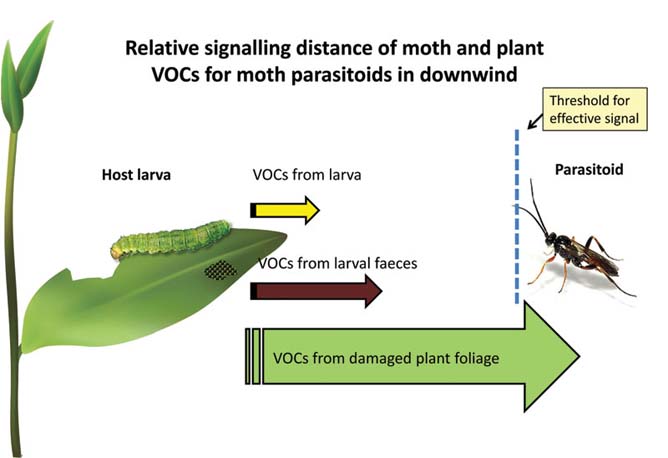
It was first discovered that pheromones emitted from a plant can send out warning signals to other plants in the area of possible infestations by insects. Perhaps some of the most extensive research in this area of biological chemistry was initially discovered in populations of pine trees which are the preferred source of food for the Mountain Pine Beetle. These insects burrow into the bark of a pine tree and consume the inner bark layer of trees to attain nutrients and lay their eggs. Mountain Pine Beetles emit pheromones which tell others to come to the area leading to infestations in a relative short period of time. What baffled the researchers initially however was the observation that trees in the general area of an infestation were noticed to produce an over abundant amount of sap even if they were free of Mountain Pine Beetles. The sap production is believed to be the defensive mechanism of pine trees to drown and eradicate the insects feasting off their interior bark.

These observations, like most in the early stages of scientific discovery only brought on more questions than answers to the researches involved in conservation efforts. Eventually it was discovered that the sap creation phenomenon was spurred on by the release of pheromones from the trees that were infested telling others in the surrounding area to kick up their defenses like a multi-organism immune system. As it turns out the same method used by Mountain Pine Beetles to notify each other of a food source was being employed by the pine trees to start up their defensive mechanisms.

plant communication 2

Can plants hear and talk?

Most have heard the rumors that singing to a plant or playing classical music can help the plant grow quicker and remain healthy however in the past this could not be verified as a scientific fact. Audio communications were once thought to be exclusive to insects and animals however in 1960s it was discovered by scientists that listening to plants can give an insight into their health. Bubbles within plants can actually be detected to indicate the declining health of the organism. This occurs as a result of respiration during photosynthesis where leaf pores open up to receive carbon dioxide causing a loss of water within the plant. This water loss causes the root system to intake moisture sending it through xylems from the roots to the leaves, however during this process if the soil is too dry air bubbles can be sucked into plant membranes. The sound of these air bubbles are a detectable phenomenon which is also thought to be used by some insects when looking for food sources.

plant communication 3

Many plants have been identified as having a response to certain sounds and it has even been discovered that some plants create their own sounds for the seeming purpose of communication. Chilli and fennel are another example of sound relationships between plants. Monica Gagliano from the University of Western Australia who specializes in plant physiology made a discovery that has changed the way scientists are thinking about communication. Fennel plants produce a natural chemical in the form of a pheromone which inhibits the growth of plants nearby. Chili seeds however are found to grow quicker when in the presence of fennel plants. This is believed to be a defensive mechanism for chili seedlings to ensure their survival in the presence of a possible threat. The discovery came as a shock however when chili plants and fennel plants were separated in chambers which blocked the transference of smell but allowed the transference of sound. The same effects resulted from this experiment leading researchers to believe that chili plants are able to detect sounds from the fennel plants causing their defensive mechanism to kick in.

plant communication electromagnetic

plant communication 4

How else do plants communicate?

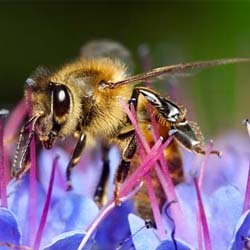
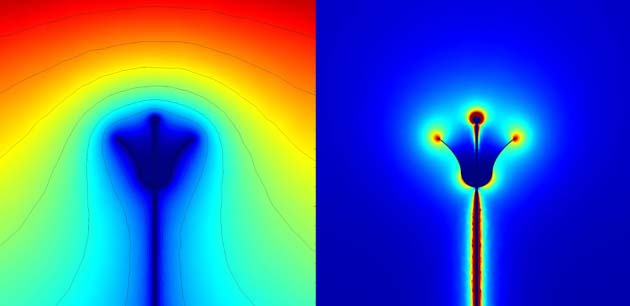
Aside from using chemical signals in the form of pheromones, recent research from biologists have discovered that some flowers use electrical fields to communicate with insects. The shape of a flower, its color, scent and pattern attract insects such as bumble bees to pollinate the plant however recent studies also indicate that electricity is one of the many methods utilized by some species of flowers to communicate with other organisms.

The research indicates that bees possess a positive charge as they acquire friction from particles such as dust when they fly through the air. Electrons are lost from the bees as a result of this friction which is what gives them a positive electrical charge. Plants on the other hand have a negative electrical charge since they are grounded. When a bee lands on a flower it transfers its electrical charge to the plant creating an electrical field. Plants conduct electricity much slower than what we would see in metal so the charge remains in the plant for a short period of time. It appears as if bees can sense the electrical field generated by flowers and their behavior changes when in the presence of this by helping them identify colors quicker. Further research still needs to be conducted into the benefits of electrical charges in plants but it seems apparent that this does provide them with an evolutionary advantage which was previously unknown.

plant communication pheromones

what is echolocation

echolocation

When one thinks of echolocation the first thing that typically comes to mind is an image of a bat or a dolphin, however the marvels of this natural adaption and how it works often elude those who just glance over it. Echolocation has played a key role in naval warfare over the last century in the form of SONAR navigation but what is more astounding is that some humans have also discovered a way to harness this as a survival apparatus. In order to better understand this biological phenomenon we must first explore the process in how echolocation works.

How Does Echolocation Work?

how does echolocation work

Echolocation uses the reflection of sound waves off of objects to determine a bearing and obstructions in order to navigate safely. Bats are perhaps the most famous animal for using this and have become masters of navigation through sound as well as for the purpose of hunting. In bats, sounds are created through the mouth or nose to reflect off objects which are then detected by their ears to create a mental image of the world around them. The precision attained by these creatures through the master of their biological intuitions allows them to detect objects as narrow as human hair.

Many animals use ultrasonic sonic sounds for echolocation however these are not necessary to properly harness the skill. The advantage of utilizing ultrasound is primarily for hunting so that predators don’t alarm their prey with audio notifications of their approach. In addition to bats, dolphins and whales, scientists have discovered that some birds and shrews use echolocation to hunt or navigate.

Evolution tends to work both ways though leading some creatures to adapt a method to gain a safeguard against creatures that may hunt them using sound waves. In some types of crickets and beetles it has been discovered that they emit a clicking sound to avoid being eaten. The emission of these sounds works to their advantage of some insects to scare away bats by throwing off their audio sensors or startling them. Recent research in technology may have found a way to disguise the reflection of sound waves to create a seemingly invisible audio profile for certain objects.

sonar technology

Use of Echolocation in the Military:

SONAR and RADAR technologies have been developed by closely studying the capabilities of bats and dolphins to harness traveling sound waves to navigate and detect objects. SONAR can only be used in the water and helps to determine a distance from the sea floor as well as detecting ships and submarines which could pose a potential threat. RADAR technology on the other hand is used in both naval and aerial detection and employs electromagnetic waves to locate ships or planes as a defensive strategy.

Human Echolocation:

echolocation 1

With superheroes such as Marvel’s Daredevil, the thought has crossed the mind of young and old alike: can humans adapt to use echolocation? The answer is a definite yes! In fact echolocation in humans is already being used in a primitive sense by many deaf people as a way to navigate their environment. Perhaps one of the most famous echolocators is Daniel Kish who currently works with blind teenagers, after losing his vision at the age of 13, to teach them the skill he has harnessed. Human echolocation works by producing clicks or tapping with the tongue, typically several times a second to gain a bearing of the objects around the individual. Some other notable individuals who have harnessed this skill are Ben Underwood, Dr. Lawrence Scadden, Tom De Witte, Lucas Murray and Juan Ruiz. In addition advanced research into echolocation is being conducted by Kevin Warwick using ultrasonic pulses from a neural implant to stimulate neurons in order to detect objects and their movement.

With the advancements of technology and the ability for humans to adapt and learn from nature such as the use of echolocation the lines of supernatural are becoming blurred more and more every day. In fact echolocation apps are now available on smartphones to allow users to map a room to get a clearer understanding of how this ability works (and how bats see the world).