Home » Articles posted by Anttu Lein (Page 4)

Author Archive

robotics simulate biomechanics

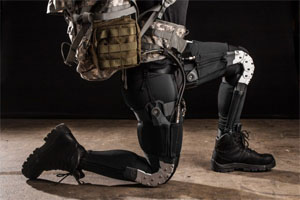
military bionics

Mobility problems are often overlooked by many but statistics show that one in fifty people worldwide have a form of paralysis that inhibits movement. With the efforts made by physicists and researchers this may become a problem of the past. Several prototypes of exoskeletons are being developed which can enhance the mobility of an individual helping to recover from a traumatic injury, disease or accident.

Biomechanics is the study of how the body and its interconnected parts function and is considered to be a mix of several fields of biology, physics and chemistry. Research gathered from biomechanical studies is allowing scientists to emulate functions of the human body to be used in enhancing motor skills that may be inhibited in a person. One of the most impressive technologies released recently is that of the wearable robotic suit.

bionics in rehabilitation

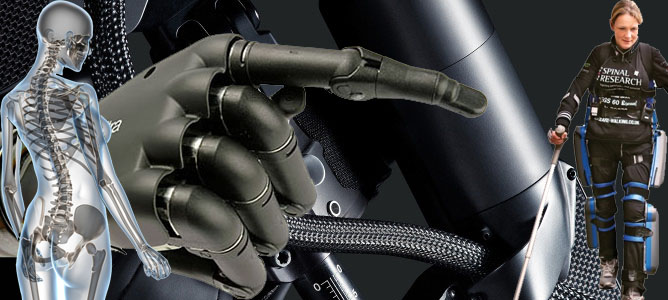
The wearable robotic suit is essentially a primitive exoskeleton which allows the wearer to carry a battery in a backpack that powers adjustable legs and joints providing additional support for people with weakened muscles and may help some who can no longer walk. It contains a balancing mechanism to help ensure the wearer does not fall over and can detect shifts in weight to adjust to accommodate artificial balance.

Prosthetics have evolved dramatically in the last decade and can be seen in paralympic athletes and wounded soldiers. Survivors of tragedies like the Boston Bombings have also brought to light how physical therapists can help rehabilitate a person through prosthetics. Ekso Bionics is just an example of one company using the idea of prosthetics to achieve a wearable bionic suit. The legs are driven by motors connected to a battery in a backpack. While the user moves on crutches the bionic suit detects slight shifts in their weight to initiate movements in the legs in a fluid motion.

One of the fundamental unseen problems with individuals facing paralysis is feeling of a loss of identity which can cause additional emotional and psychological damage. Living with limited mobility causes everyday routines to be taxing on not only the individual’s body, but mind as well. Although there is hope on the horizon for those facing physical disabilities, will there ever be a improvements for those inflicted with traumatic brain injuries?

neuroscience regeneration

Neuroscience is currently working to provide solutions to repair connections in the brain caused by injury with a variety of cutting edge techniques. Brain controlled interfacing might be one solution which allows implants or devices worn on the head to essentially read a person’s mind by detecting the output of electrical impulses. Stimulating neurons and nerves in the brain is another technique being studies using electrical currents to rebuild neuron pathways. And finally, stem cell research may also allow doctors to rebuild damaged brain tissue in a somewhat more natural bioengineering feat.
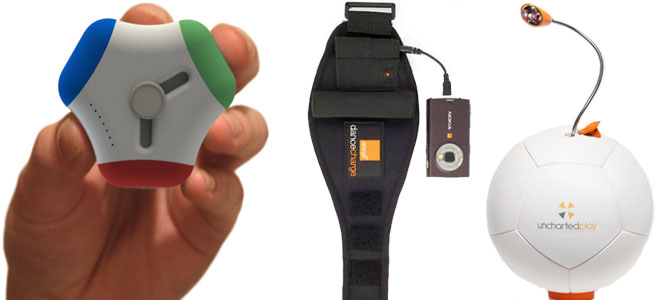
Kinetic Energy Resource for Next Generation

In our modern world we are always moving, whether we are commuting in cars, on foot or by bicycle or during our exercises in our spare time. All of these activities expend energy. But what if we could harness a portion of the energy we expend and store this to be used later?

This may just be the next big energy resource scientists and technologists seek to harness. Kinetic energy has already been researched fairly extensively and a new trend is arising to help those less fortunate to tap into a new energy resource to generate electricity where infrastructure may not provide the capability.

Soccket Kinetic Energy

Products have already starting hitting the market such as the Soccket and Pulse released by an up and coming technology company called Uncharted Play. The Soccket is a soccer ball with a pendulum embedded inside it to capture some of the kinetic energy output from kicking the ball around. It also contains an input port that allows children to run reading lights or charge phones from the battery within the ball. The pulse uses similar aspects of the engineering but is applied to a jump rope with the gyroscopes included in the handles of the jump rope.

Kinetic Energy Charger

Some other spins on this technology have already been available on the consumer market and in limited testing with the military using biomechanics to charge a battery. This incorporates an object clipped on a person’s clothing or backpack containing a system of magnets and coils which move and infuse with the wearer’s movements.

Despite the speculation of the potentials to harnessing kinetic energy, the applications of this technology is still in its infancy catering primarily to personal convenience. Although kinetic energy is a renewable energy source its ability to capture significant amounts of electricity has excluded it from being incorporated into large scale energy strategies with the exception of wind energy.

tropical cyclones in east asia

tropical cyclone

Climate Changes Influence Cyclones

Tropical cyclones are no stranger to East Asia, commonly known as typhoons in the region. Environmental studies indicate that the over the past 30 years typhoons have shown a pattern of increasing intensity largely due to the heating of the surface temperature of the South China Sea. Recent research indicates that the coastlines of Japan, Korea and China are the areas most affected by this phenomenon as the currents and increased temperature provide additional fuel to cyclones on their journey north.

Countries in South East Asia such as Vietnam, Taiwan and the Philippines have not experienced the same intensity of cyclones which is attributed to two factors. Surface temperate of the Pacific Ocean in combination with the Pacific Walker circulation are an integral part of this weather phenomenon. The Pacific Walker circulation is an air flow pattern which influences the water current around the South China Sea. Also known as a Walker Cell, this statistical model explains heat distribution in the tropics which are largely regulated wind and current patterns along with cyclones.

global warming threats

Changes in the air flow patterns on the Pacific Walker circulation drive the path of cyclones into the coastal waters of the South China Sea in East Asia. Research from Professor Chang-Hoi Ho from the Seoul National University suggests that global warming may influence water currents and air currents in throughout the Pacific altering weather patterns in affected regions. With the threat of increasing frequency and intensity of these cyclones, climatologists are hard at work creating statistical diagrams to predict where cyclones may make landfall in the future to provide early prevention and increased defenses to save lives.

Environmental Effects of Cyclones

In addition to the factors detailed above, scientists from Harvard University researching climate change have discovered that cyclones also spurt water into the stratosphere which increases greenhouse effects in the region. Geophysical research scientists Romps and Zhiming Kuang were inspired by an article discussing the theory that water vapor has increased in the stratosphere approximately by half over the last fifty years. Armed with infrared satellite data Romps and Kuang studied data sets of tropical climates since 1983 and discovered that cyclones are known to spray jets of water vapor in regions around the Philippines, Mexico and Central America.

typhoon diagram

Climate change theories have long since stated that increasing global temperatures would lead to increasing occurrences of cyclones and hurricanes however the possibility that cyclones are in turn accelerating climate change is an alarming revelation. Water vapors typically do not make their way into the stratosphere because the tropopause, which is the lowest portion of this atmospheric layer, is the coldest layer of the Earth’s atmosphere acting as a buffer to keep other gases out. Depending on the elevation of the cloud formations during a cyclone in these tropical regions it is possible for some streams of vapors to make their way past the tropopause into the stratosphere. Climate scientists now believe that cyclones play a larger factor in regulating humidity in tropical environments.

military technology anti torpedo defense

anti torpedo technology

The United States Navy is readying its deployment of the latest Naval Defense system to intercept torpedoes aimed at aircraft carriers. The program named Surface Ship Torpedo Defense System (SSTD) has already undergone a number of preliminary tests and is slated to be deployed on its first operational ship the USS George H.W. Bush for advanced testing. Many of the components of the SSTD system have already been installed and tested on the USS George H.W. Bush however follow-up end to end testing is still required to ensure the functionality of cohesion between each component.

The SSTD system works by employing processors, sensors and a missile to track and intercept incoming torpedoes to a ship. The Program Executive Office of Submarines, Rear Admiral Dave Johnson, predicts that this technology can be deployed on all aircraft carriers in the naval fleet by 2035. The SSTD is expected to be latest addition to Quick Reaction Assessment aboard carriers and other ships.

aircraft carrier naval technology

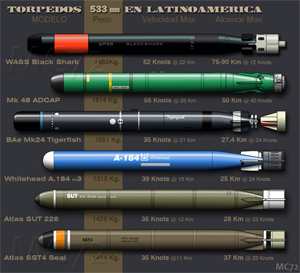
Torpedoes have posed an intricate problem to naval defense systems since their invention WWI. Although a number of other systems are already employed such as Sea Sparrow missiles designed to intercept air to surface threats detecting threats under the waves poses many more challenges. Several problems persist when attempting to detect torpedoes including depth, launch distance and the type of torpedo launched. The current technology is designed to detect three primary torpedo types, straight running, acoustic homing, and wake homing torpedoes. Each kind operate at varying depths, create unique acoustic signatures and are designed to work more effectively for different types of ships.

The latest system will consist of a sensor (Torpedo Warning System Receive Array) which will be launched and towed from a ship that detects acoustic frequencies in the water which will process data received and send a warning signal to crew members if a potential threat is perceived. Once a signal is verified as a potential torpedo or hostile object a CAT (countermeasures anti-torpedo) is fired from the ship to intercept the incoming threat.

types of torpedoes

The SSTD has proven effective in identifying and deploying countermeasures against torpedoes in a matter of seconds. Smaller ships were involved in the testing of these systems initially which has spurred the Navy to employ this on their largest ships, aircraft carriers. The components which make up the SSTD systems have been derived from other interception technologies already in use however the Countermeasure Anit-Torpedo technology was developed recently for this system by the Pennsylvania State University Applied Research Laboratory. This facility was also credited to the creation of ATT (Anti Torpedo Torpedo) in 2006.

The Pennsylvania State University Applied Research Laboratory already developed the Counter-Torpedo Detection, Classification, Localization (DCL) system to identify varying types of torpedoes fired at a ship. Although the components of the SSTD are still classified it is expected that a similar system to the DCL will be one of the modules employed in the new defense system. Most of the U.S. Navy’s ships have already employed defense systems such as Sea Sparrow interceptor missiles, for air to surface threats, and Phalanx Close-in-Weapons Systems (CIWS), for surface to surface threats (such as speed boats) and with the latest addition to their defensive operations the SSTD is expected to counter submersible threats in the near future.

quantum computing technology

alexei fedorov and eryin wang

Quantum computing is a key part of modern advances in technology allowing supercomputers to provide computing solutions millions of times faster than what could be done by humans manually. The challenge to achieve “fault-tolerant” quantum computing capabilities is currently being tackled by a unique collaboration of researchers from two prestigious schools, Tsinghua University in China and the U.S. Department of Energy (DOE) from Berkley, California. Research is being conducted in segment of Berkley’s Lab called the Advanced Light Source (ALS).

The ALS facility is a section in the D.O.E. at Berkley which specializes in synchrotron radiation. The process works by using a series of ultraviolet light beams along with superconductive materials which are internally insolated but allows conductivity on the surface. Using high-temperature superconductivity creates a particle known as “Majorana zero mode” which is what will allow researchers to achieve a state of fault-tolerant quantum computing. One of the primary materials used in this system is “bismuth strontium calcium copper oxide” or BSCCO for short. One researcher by the name of Alexei Fedorov at ALS stated that this is the first instance of using high-temperature superconductivity with ultraviolet light beams on a topological surface.

quantum computing

Publications regarding the research conducted at ALS are published in the Nature Physics journal by multiple authors including Shoyun Zhou, Xi Chen, Hao Ding and Eryin Want from Tsinghua University in China. Despite the myriad benefits that can be achieved from quantum computing a major flaw is present which can hinder the processing of quantum data (also referred to as “qubit”). The qubit which stores information and manages the processing can be disturbed by activity with electrons and other environmental elements surrounding the qubit. The new method of applying topological insulators in the quantum computer looks to be a viable solution to resolving this issue by ensuring immunity to decoherence with the qubit.

fault tolerant quantum computing

Further studies conducted independently out of the London Centre for Nanotechnology and the University of British Columbia show that a relatively common substance, copper phthalocyanin (CuPc), may be a cost effective solution for a semiconductor in quantum computers. CuPc is currently used in the £5 bill to create a blue pigment as a counterfeiting security precaution. Although it is used simply as a blue dye, CuPc has been found to be much more effective for semiconducting because of a peculiar property it exhibits where an electron can remain in a superposition (the electron can remain in two states simultaneously) for an extended period of time compared to other compounds used.
By examining the decay of an electron’s superposition a determination can be made regarding the effectiveness of a substance for the use of quantum computing. Quantum computing differs from general computing in that binary bits (0s and 1s) are organized in groups called qubits which need to be precisely controlled on during computations. The superposition state is the essential part of qubit computation which increases the speed at which a quantum computer can process information. Increased length in the superposition state helps to ensure that quantum data is stored, transmitted and processed properly.

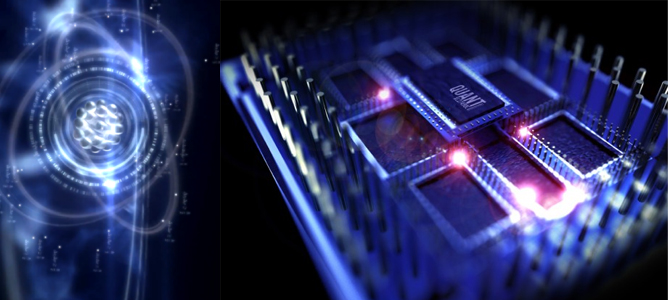
quantum computing chip

The CuPc compound has a number of advantages that make it more suitable than other substances for its application in quantum computing. In addition to the extended superposition states of electrons (which is based off their charge) the manner in which electrons spin also helps when applied in quantum computing. Its blue pigment as well is effective in absorbing visible light while also making it relatively simple to modify its physical and chemical properties thus allowing greater control of its electromagnetic properties.

Research into the application of copper phthalocyanine has been authored by Marc Warner from the London Centre for Nanotechnology. His teams’ findings could help produce more effective quantum computing at a cheaper cost in the near future. Dr. Warner theorizes that building an effective quantum computer could help solve calculations that would take classical computers a lifespan greater than that of our solar system and possibly even our universe to complete. Scientists involved in complex studies in physics and astronomy seek to gain the greatest benefits from this technology which can help us understand aspects of physics once thought nearly impossible to compute.