
Home » Articles posted by Anttu Lein (Page 3)

Author Archive

stimulating brain might make future soldiers

neuroscientists

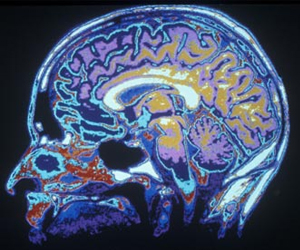
Neuroscience research has shown that electricity could help to stimulate the brain and might be helpful to rebuild neuron pathways. But recent studies out of the Wright-Patterson Air Force Base in Ohio suggest that creating stimulus to the brain using mild electrical currents could help to improve attention and quicken an individual’s ability to learn tasks.

The notion of using electricity to stimulate the brain began emerging heavily by neuroscientists in the 1980s using a method called trans-cranial direct current stimulation (tDCS) and was found to be effective for cases of depression. After decades of research, experiments suggested that tDCS could be useful in enhancing healthy brains as well. Preliminary studies have begun on base at Wright-Patterson to see if using these same methods could enhance the cognitive abilities of airmen.

future soldier brain stimulation

The tests consist of an airman with electrodes attached to key areas of his head watching a simulated air traffic control system over a monitor. During the exercise the soldier must identify threats and friendly targets among an escalation of air traffic. Typically the performance of the analyst declines as the duration of the task is increased and to the surprise of the research team stimulating the dorsolateral prefrontal cortex, which is believed to influence attention skills, the performance of the analyst did not decrease over the 40 minute period of activity.

Although other studies have been conducted in the past using magnets, ultrasound and lasers to test how brain stimulation affects individuals, electricity has a number of benefits for military use. The most obvious benefit is the fact that neurons in the brain already function of electrical pulses allowing a more natural approach to stimulation. Additionally electrical devices can be manufactured for better mobility and cost effectiveness.

air force pilot training
The military research is still in its early stages and is only being conducted on personnel on the ground but depending on the results the military is already considering the possibilities of supplying pilots with wireless caps to stimulate their brains during long flights. This would work from a sensor using electroencephalography (EEG) to provide signals to stimulate the pilot’s neurons with the existing tDCS technology.

Despite these revelations, Berhard Sehm disagrees with the military use of this neuroscience technology as it could pose hazardous. Sehm, who works as a cognitive neuroscientist in Leipzig, Germany at the Max-Planck Institute for Human Cognitive and Brain Sciences stated that the research the military is so interested in is largely inconclusive. Regardless of the debates the U.S. Air Force has shown a great deal of interest in the possibility of using electrical brain stimulation to engineer better future soldiers that can perform with superhuman like capabilities.

bioengineering for biofuels and food crops

making biodiesel

Bioengineering has been through myriad debates questioning if it is an ethical form of scientific research, however as research continues a plethora of benefits are being realized in this field of science. Recently a major subject of debate has been not on the ethics of biotechnology but a solution to maintaining balance between using farmlands for food or biofuel production. Clever research from scientists may have solutions to bring us closer to the goal of managing this harmony.

New research may allow the production of biofuels such as biodiesel to become more cost efficient as a viable source of energy production. Caldicellulosiruptor bescii is bacteria that forms in geothermal freshwater hot springs primarily found in places like Russia and Yellowstone National Park. A study from Janet Westpheling published out of the University of Georgia in the “Proceedings of the National Academy of Sciences” shows that a bioengineered version of this bacteria could help provide greater conversions of biofuel harvests from plants such as switch grass and miscanthus. Janet Westpheling, a Professor for the Department of Genetics from University of Georgia, and her colleagues from BioEnergy Science Center, funded by the U.S. Department of Energy, were able to successfully use bioengineered C. bescii organism to break apart unusable plant biomass for biofuels.

biofuels from caldicellulosiruptor bescii

The benefits of this new solution could help to overcome one of the biggest problems in making biodiesel products safely, efficiently and in a cost effective manner. With this research it may soon be possible to use a small and relatively cheap amount of bacteria to convert plants like switch grass, once thought to be an unprofitable crop, into an environmentally friendly energy source. Using systems biology is the trick that geneticists use to make an organism perform a desired function that it could not naturally perform. Bacterium can currently produce chemicals that may be viable alternatives to petroleum such as ethanol, isobutanol and butanol.

Another twist in genetic research has come about from the study of how plants defend themselves against diseases. From the Wageningen Agricultural University in the Netherlands, Pierre de Wit has been studying the genes that are responsible for providing plants resistances to pathogens. By manipulating these genes it is possible to breed plants used for food crops to be more resistant against pathogens that can spread quickly through agricultural communities.

bioengineering immunity genes in plants

His research has found that a plant’s defense system contains a layered receptor system, both inside and outside the cell walls, which are interconnected and send signals once an intrusive pathogen is detected. Each of these receptors can provide a different response system to neutralize the pathogens depending on how they are detected. The first consists of Pattern-triggered immunity (PTI) which seeks to neutralize pathogens on the surface of the cell. Effector-triggered immunity (ETI) is the second line of defense is detected by the plant’s genes once the pathogen has reached the inside of a plant’s cell walls.

This research has enlightened botanists, particularly those concerned in plant pathology, as the defense system of plants appears vastly more complex than once thought. By genetically engineering the genes that are responsible for the detection of pathogens it is believed that biologists can help boost a plant’s immune system similar to how the human immune system has evolved to make some diseases virtually extinct in humans today.

greener solutions to destroy chemical weapons agents

hazmat protective chemical suits

Chemical weapons have the potential to cause a tremendously large amount of casualties and have been deemed as inhumane for use in warfare. In 1992 after nearly 12 years of negotiations the Geneva Convention founded the Chemical Weapons Convention with the goal to disarm stock piles of warheads worldwide. Despite this, some nations around the world continue to increase their stockpiles of chemical agents and won’t hesitate to utilize these weapons against their enemies.

Fortunately, the same science that brought about the existence of chemical weapons may have found advanced applications of chemistry to help counter the threat. New research coming out of Oregon State University has found that using polyoxoniobate compounds can degrade nerve agents and may be ideal for utilization in masks, suits and clothes to protect those working with hazardous materials such as sarin gas. Part of the problem when cleaning up residue from chemical weapons is the ease in which many nerve agents can be transmitted to a person. Most nerve agents begin their effects on living organisms when inhaled or upon contact to skin, making them especially effective as a method of killing and likewise account for their inclusion as a weapon of mass destruction.

chemical enzyme production

Although research in the past sought to find organic components to provide protection in suits for cleanup workers, many of these proved ineffective as they degraded quickly especially when influenced by factors such as sunlight and weather. Polyoxoniobates on the other hand are made from inorganic materials prove to be dramatically more stable in protective suits. Researchers from OSU in collaboration with several groups affiliated with the Department of Defense have conducted extensive studies to conclude that polyoxoniobates have the ability to neutralize chemical agents such as sarin gas as well as provide the durability needed to conduct cleanup operations in the harshest of weather conditions.

In addition to protective suits, separate research conducted by chemists working for branches of the U.S. military have found a greener variety of cleaning solutions to decontaminate sites where chemical weapons have been used. This research was published in an article that appeared in “Industrial Engineering and Chemistry Research” by George Wagner and some of his colleagues. Where chlorine was previously used, which can effectively neutralize chemical agents but has the potential to cause further environmental damage, peroxides have been found to prove more effective overall in the ingredients of the new formula Decon Green.

US military chemical weapons cleanup

Further research published by Frank Raushel and David Barondeau in the ACS journal of Biochemistry has found that bacteria in soil can produce phosphotriesterase (PTE) which is a protein that can serve to decontaminate chemical weapons and pesticides. The detoxifying powers of PTE have proven successful in removing tabun and sarin agents in laboratory tests. Raushel describes the influence needed to produce the PTE enzymes followed the philosophies of natural selection and evolution to bioengineer the chemical components needed to decontaminate harmful chemical agents.

whats new in biofuels

What are biofuels and why are they considered green? Unlike the fossil fuels we are familiar with, which are the remains of plant tissue and plankton that died millions of years ago, biofuels are produced from fresh vegetation which contains a significantly less amount of carbon. Fossil fuels contain high amounts of carbon because they are made up of plant life from the Carboniferous Period which have decayed for millions of years before leaving a behind the carbon rich remnants that are used for oil and petroleum today.

One of the main concerns in the production of fuel from plant matter is the cost to produce along with the land mass the crop will consume. Obviously we all need to eat, so land management becomes a challenge to balance the production of food crops and biofuel crops. Once government incentives became available to farmers many switched their crops to take advantage of the offer leaving a forecast of possible food shortages. So what can be done to solve this problem?

switch grass biofuels
A solution may lie in harvesting switch grass, a form of prairie grass once thought to be unusable to farmers. Switch grass has the ability to grow in soils that are not ideal for food crops making it an ideal candidate for production without disrupting food supplies. Even more, it is estimated that on a reasonable amount of land a farmer can produce five times as much fuel that it takes to produce and harvest switch grass.

Another challenge scientists face in the production of biofuels is converting a plant’s biomass into the raw materials required for fuel production. Wood for example contains lignin which must be removed before the sugary cellulose can be harvested. Traditionally this would require heating the wood and using chemicals to deteriorate the lignin. But biologists may have discovered a way to get around these hassles through bioengineering.

biochemists produce biofuels

By genetically modify certain trees biologists have found that they can create self-destructing cells when the plant dies. This may allow scientists to harvest biomass quicker and in a more cost efficient manner. Ordinarily engineers would use sodium hydroxide and temperatures up to 170°C to prep the biomass for use.

Plant biologists from Perdue University and biochemists from the University of Wisconsin, Madison have isolated the genes associated with the production of lignin and found that by injecting ferulic acid (FA) they can bond disrupt bonds between CA and SA building block pairs. Stripping the FA molecules is significantly easier to do with chemicals allowing biochemists to harvest biofuels from the plant mass more efficiently.

As further research continues it is likely that tremendous leaps are slated in the future of biofuel production. With more funding backing research into alternative energy solutions it seems apparent that there is not a single solution to achieving clean energy independence but the future lies in the balance of a variety of green energy solutions.

cloaking electromagnetic frequencies

metamaterials for cloaking

Scientists from the Toronto University have discovered a method to cloak an aluminum cylinder using a series of circular radio antennas to mask the object from radio waves. The experiment was conducted by Professor George Eleftheriades and his student Michael Selvanayagam currently pursuing his PhD at the university which involved using loops of antenna to reflect electromagnetic waves. Metamaterials, or artificial materials which possess properties that are not innately found in nature, are used to achieve the cloaking effect on objects by dispersing electromagnetic waves from being reflected back to a receiver.

electromagnetic waves

Although the idea of creating the appearance of invisibility is one which has been in research by many scientists around the world, enhancements into the effectiveness of this technology still has a long road ahead of it. Electromagnetic cloaking experiments began in 2006 and although they were able to achieve the intended result the applications were impractical in the real world. The object intended to be obfuscated would require a complete layer of metamaterials encasing it to produce an invisible property.

The design tested in the experiment can be used on a larger scale utilizing additional loops to obfuscate larger objects as well. The idea is generally simplistic creating a shell like encasement around an object with a layer of antennas attached to reflect a radio signature thus cancelling out the objects signature in the receiver. Tests conducted by Professor Eleftheriades require a specific signature to be emitted from the antennas however advanced applications could prove to be more effective allowing the antennas to work as a sensor and transmitter to adjust automatically to different frequencies.

electromagnetic cloaking

Applications for this technology are most likely going to provide a beneficial tool for the military to utilize for concealment of vehicles, stations and surveillance. Not only can this electromagnetic cloaking device hide an object’s signature, it can also provide more subterfuge by altering the perceived size of an object along with its location. Further research into these antennas seek allow concealment not only radio waves but light and Terahertz radiation.

The term metamaterial cloaking refers to this general process of using artificial materials (such as plastics and metals) that have a size smaller than the wavelength of the frequency. The objective is to find a negative refractive index which is used to cancel out a signal for the desired wavelength. Research into metamaterials has become one of the newest branches of physics and electromagnetic studies.